
We’re Being Played: Propaganda, Memes and War

Packaging war in meme-driven narratives uses cultural cues to turn combat into entertainment, normalizing violence and influencing how future conflicts are perceived.
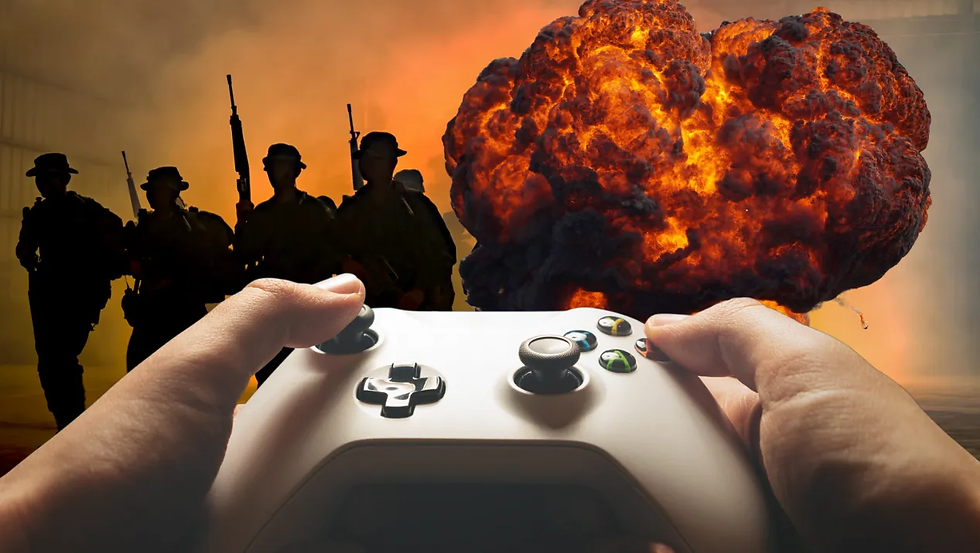
Montage: MATA_PL Pixabay | Foto Artist Canva | Proxima Studio
Key Points:
Memetic warfare uses pop culture symbols, like Call of Duty and Captain America, to frame conflict as heroic and morally right.
Social media is flooded with memes that glorify military strikes, trivializing violence, and disregarding human costs
Superheroes and dominance symbols confer authority, reinforce social identity and heighten perceptions of us-versus-them
Repeated exposure to “war as entertainment” can normalize violence and how future conflicts are perceived.
Note: If you have a teenager or young adult in your life, as we do, you already know that memes are a primary language of youth culture. They understand the formats, the references, the visual grammar, and the ironic positioning that makes a good one. They recognize a Drake reaction meme or a deep-fried edit instantly and can write entire sentences using only emoji.
With the current cascade of war memes, I worry about what our kids are internalizing from the political environment. The memes are especially troubling as I discuss below, but they also presents an opportunity to help kids recognize that they have a superpower. With thoughtful questions, their pop culture knowledge can make them skilled at identifying propaganda.
Visual literacy for images, memes, and emoji is a critical skill. Without guidance, kids may forward a SpongeBob explosion clip or laugh at a Lego version of a world leader without realizing they are engaging with content deliberately engineered to manipulate their emotions and make war seem like a video game.
There are some easy conversation starters for your and the kids in your life at the end of this post. This is also a great opportunity to learn from them. They have a front-row seat to current culture.
Dr. Pam
When Memes Go To War
Memes can make you laugh, fill you with outrage or make you feel pride. They repackage shared cultural knowledge to activate existing schemas in surprising, entertaining or outrageous ways. They are also the weapons of choice for Iran War propaganda. War memes remix pop culture into unexpected juxtapositions of images, short videos, music, and phrases that spread rapidly across digital networks, fueled by their ability to activate our memories and capture our attention.
The purpose of propaganda is to sell war, foster patriotism, and demonize enemies. Propaganda from both the United States and Iran are leaning into memes, blending clips from video games and pop culture to get our attention and gain our support. But the information about the war is on your social media feed, not from the battlefield. We don’t hear about the human cost of physical combat. We are caught in the middle of a cognitive battle, with competing memes that tell us who’s the hero, who’s the enemy, who’s “winning,” and what a “real man” is supposed to do.
A well-constructed meme triggers emotion, tapping into what we already know in new ways (Shifman, 2014). We expect memes to truncate information to provoke a response. They feel innocuous but are insidiously powerful. Humor lowers defenses, suspends critical analysis, and enhances social bonding. Heroic and dominance cues make the message feel morally right, reinforcing social identity and heightening perceptions of us-versus-them. The fastest-spreading content is optimized to activate our emotions, not for accuracy, proportion, or moral weight.
The Age of Memetic Warfare
Since the U.S. attack on Iran, the White House and Iran have been duking it out on social media with short videos that glorify real missile strike footage by framing it with rapid cuts of video game visuals, gamified war memes and pop culture icons, like SpongeBob and Captain America. There is no evidence of the human cost. There is no clear boundary between what is real footage and what is fabricated. These fast-paced videos craft mini-narratives of war that reduce the emotional weight of combat and turn conflict into something that looks like play.
How Memes Work in the Brain
Memes are fast and efficient because they operate almost entirely through rapid, associative, emotionally driven information processing (Kahneman, 2011). They make highly effective propaganda by appealing directly to our emotions, group loyalties, and visceral responses, short-circuiting critical thinking shifting attitudes before we realize we are being persuaded.
Neither the White House nor Iran is creating new visual languages. They are crafting meaning by hijacking existing cultural containers, like Call of Duty, Marvel’s Iron Man, and Pokémon, drawing on our years of exposure as lifelong media consumers. Wrapping military footage inside childhood cultural references triggers the positive memories of recognizable cultural symbols. Emotions act as filters that shape how we interpret information and perceive reality, heavily influencing decision-making and memory. States such as fear, happiness, or pride determine what we see, often causing us to focus selectively on information that fits with what we feel. If you know SpongeBob fan (and who doesn’t?), seeing him next to an explosion sanitizes conflict and frames it as entertainment, thus trivializing violence and human life.
Young Men Are the Target
When the White House cuts a Call of Duty montage into real action footage, or drops a superhero into a war meme, it amplifies moral authority and macho credibility. The message is the same: war is a game, our side is right, and strength wins. Cartoon versions increase the emotional distance of messages and make us feel safer, reducing conflict further to a game-like experience. Originally World War II propaganda, Captain America still signals that the mission is righteous and patriotic without ever having to say so. These memes normalize a hypermasculine, militarized response and encourage us to accept policies out of loyalty rather than ask questions.
Wars propaganda has traditionally functioned as a device for group cohesion, our-country-against-yours, and that is visible in the moral authority embedded in the White House’s themes. Public response to the war has been highly polarized, by both political party and gender. These memes are generating attention, but the economic realities of this conflict are a powerful impediment to positive public sentiment. Even if memes fail to build support for the war, they do real harm when they set a new standard for information and how we relate to violence.
Repetition Shapes Reality
The goal of memetic warfare is to shape how people think before they evaluate the facts. Flooding feeds with sizzle reels of gaming clips, superhero memes, and dominance jokes primes people to see war through a lens of inevitable, even desirable, heroic excitement, making certain policies feel right without anyone seeing the boots-on-the-ground reality. Social media campaigns can also inoculate audiences against later, more fact-based information that makes correction harder once the beliefs are set (Lewandowsky & van der Linden, 2021).
Isn’t It Ironic?
The White House has blamed video games for inspiring domestic shootings. It’s ironic that they are using video game aesthetics to strip the moral weight from real violence and casualties. The media condemned as a driver of violence at home has become a tool of persuasion when the violence is state-sanctioned and directed at others.
Iran, meanwhile, supported by Putin’s disinformation machine, understands the game, too. They integrate western pop culture and surreal, nostalgia-driven formats, like Disney’s Inside Out, Lego soldiers, rap music, and Teletubbies, into memes directed at Trump personally. Iran is using mockery and humiliation against a leader whose identity is built on projecting dominance. It is also a coordinated effort to bypass traditional media and influence global perception, particularly among nations Trump has alienated through tariffs, diplomatic pressure, or outright insult. Where MAGA audiences might read the Lego Trump as enemy propaganda, international audiences are already primed by their own grievances with U.S. foreign policy. Iran is not just trolling the president. It is messaging a global audience to build sympathy for their cause.
Both the U.S. and Iran are pulling triggers on mental models the audience already holds. Neither is sharing real facts. The audience, scrolling past missile strikes the same way it scrolls past dance videos, may not notice how it shapes what they accept, ignore, and never think to question. Propaganda has always worked best when the audience doesn’t know it’s the target. Social media memes make that easier than ever. When war is indistinguishable from entertainment, democracy has a problem that no algorithm will fix.
Talking to Kids About War Memes
Start with what they already enjoy. Kids are drawn to memes because they are funny, fast, and familiar. Use memes they already share as the entry point.
Ask what makes it work. “What makes this funny or interesting?” helps them notice the emotional hook that makes memes appealing and memorable.
Connect to their world. Kids recognize characters, games, and formats instantly. Ask where the imagery comes from and what it means to them. That familiarity is the leverage point for understanding influence.
Make decoding a game. Treat analysis like a challenge. “What’s this trying to say?” “How do these images work together?” or “What’s missing?” taps into the same pattern-recognition skills and increases their ability to see how framing changes perception.
Use remixing as learning. Have them change the meme to send a different message. Kids relate better when they can participate. Creating their own versions reveals how easily meaning can shift.
Link feelings to interpretation. We all engage with memes emotionally first. Asking “How did this make you feel?” shows how emotion shapes what they think it means.
Distinguish between real and fabricated. AI-generated content and edited clips circulate alongside genuine strike footage with no labels. The absence of a source is itself information worth noticing.
Compare with something “real.” Put a meme next to a news clip or article about the same topic. Kids can see how a meme simplifies and elevates emotion, while a news story adds detail but doesn’t command attention in the same way.
Keep it conversational. Treat discussions as shared exploration rather than instruction.
Build awareness, not resistance. The goal is to help kids recognize the subtle ways media content influences their understanding of the world and their beliefs.
References
Dawkins, R. (1976). The selfish gene. Oxford University Press.
Kahneman, D. (2011). Thinking, Fast and Slow. Farrar, Straus and Giroux.
Lewandowsky, S., & van der Linden, S. (2021). Countering misinformation and fake news through inoculation and prebunking. European Review of Social Psychology, 32(2), 348–384. https://doi.org/10.1080/10463283.2021.1876983
Shifman, L. (2014). Memes in Digital Culture. MIT Press.

Apr 02, 2026


